
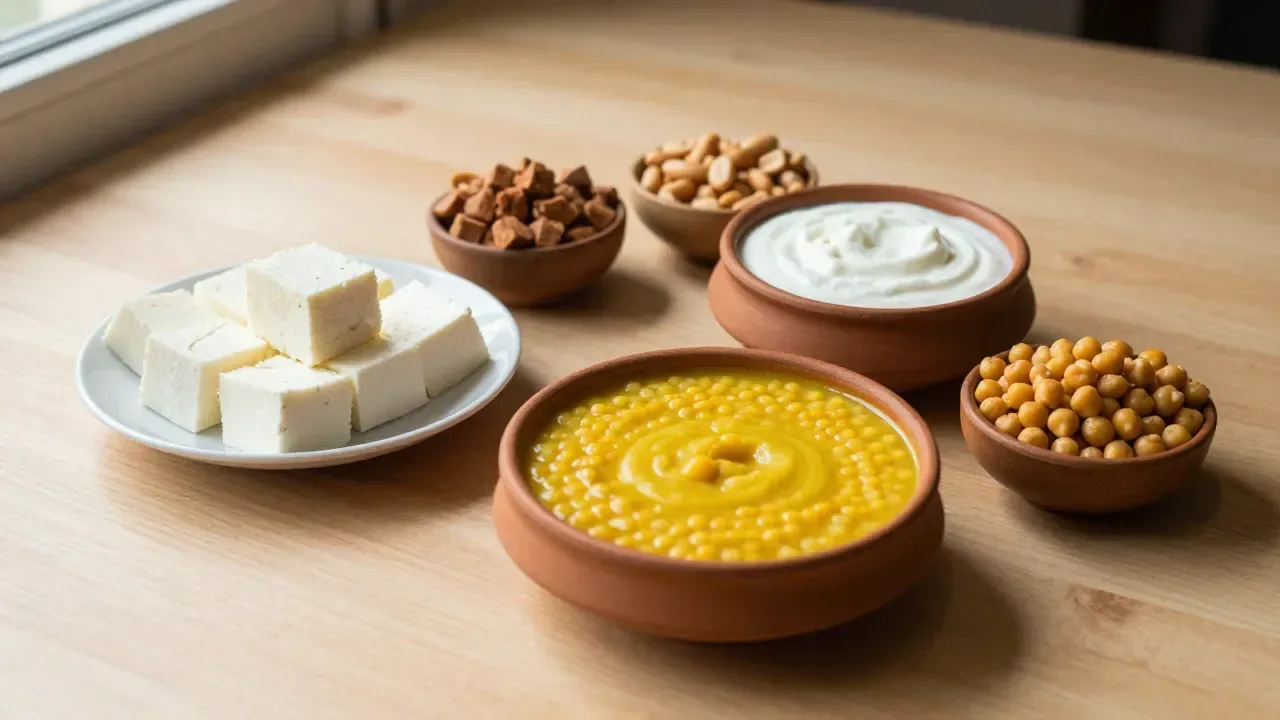
Protein comes up constantly in conversations about diet, but it rarely gets planned for on an everyday vegetarian Indian plate — most meals lean on rice or roti, with protein added almost by accident. Getting enough is simpler than it sounds, and does not need any special powder or supplement.
Why protein matters, in plain terms
- It builds and repairs muscle, skin and organs
- A growing child's body uses it to build height and strength
- During pregnancy and breastfeeding, the need goes up because two bodies are being built or fed
- Feeling full for longer after a meal is often about the protein in it, not just how much food was eaten
Roughly how much is enough
These are general ICMR-NIN reference figures — a rough day-to-day guide, not a target to hit exactly every single day.
| Who | Roughly how much protein a day |
|---|---|
| A child aged 4–7 | ~20 g |
| A child aged 8–10 | ~30 g |
| A teenage girl | ~45–50 g |
| An adult woman | ~50–55 g |
| A pregnant woman (2nd/3rd trimester) | her usual need, plus roughly 10–25 g |
| A breastfeeding mother | her usual need, plus roughly 15–20 g |
These are general guides and vary by body weight — a doctor or dietitian can work out an exact number if one is ever needed.
Everyday vegetarian protein, roughly
The one habit that matters more than any single food
Rice and wheat are both missing an amino acid that dal happens to have, and dal is missing one that grains have. Eaten together in the same meal, they complete each other. This is why dal-rice, dal-roti and rajma-chawal are not just tradition — without anyone planning it that way, they are complete protein. Having dal at only one meal a day, and skipping it the rest of the day, is a more common gap than avoiding protein altogether.
Three easy additions, without changing the menu
- A spoon of roasted chana or peanuts stirred into the evening snack
- Curd on the side at lunch, most days
- A second, smaller katori of dal at dinner on a day when lunch was mostly rice or roti with vegetable
For fussy or small eaters
A child who won't finish a full katori of dal can still get protein from milk, curd, paneer cubes, or a dal- or besan-based snack such as a cheela — it does not have to come from one dish alone across the day.
When to check with a doctor
Ongoing tiredness, slow growth in a child, or changes in hair and nails are commonly linked to protein, but they can have several other causes too. This is nutrition guidance, not a medical diagnosis — if any of these persist, it is worth raising with a doctor rather than only changing the diet.