Cramps (dysmenorrhoea) happen because the uterus tightens to shed its lining. Pain on the first day or two, in the lower belly, back, or thighs, is ordinary.
What helps, in rough order of evidence
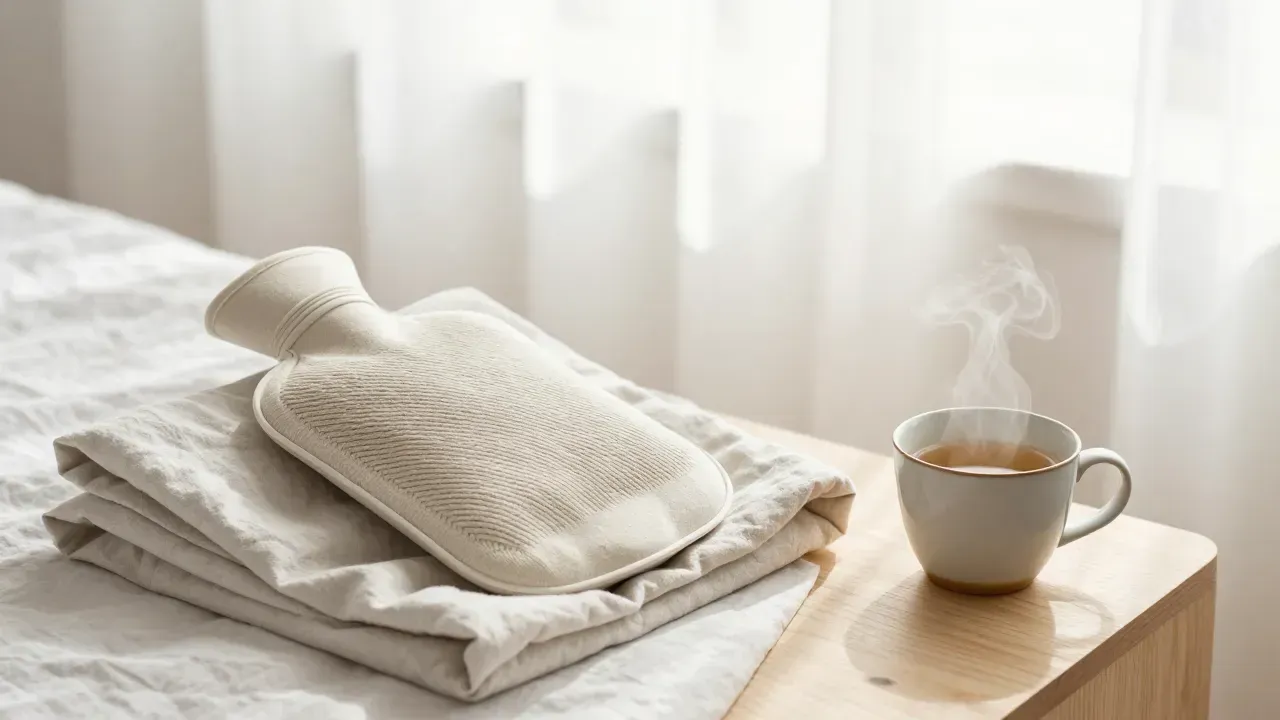
- Heat. A hot water bottle or a warm bag on the lower belly performs about as well as common painkillers in trials, and has no side effects.
- Movement. Walking or gentle stretching lowers pain for most people, even though resting feels more natural.
- Sleep. Pain is felt more sharply when you are short of sleep.
- Warm fluids. Comfort more than cure, but they help.
Food
There is no food that cures cramps. Eating regularly matters more than what you eat — long gaps make cramps and headaches worse. Iron-rich meals matter across the month if your flow is heavy.
Painkillers
Over-the-counter painkillers do work for period pain. Ask a pharmacist or doctor which one and how much is right for you — the right choice depends on your age, weight, and stomach history, and it is not something to copy from a friend. Never take a painkiller on an empty stomach.
What is NOT ordinary period pain
See a doctor if:
- Pain does not improve with heat or ordinary painkillers
- Pain keeps you home from school or work every month
- Pain begins several days before bleeding and continues after it stops
- Bleeding soaks a pad in under 2 hours, or lasts more than 8 days
- Pain started suddenly after years of easy periods
These can point to endometriosis, fibroids, or an infection — all treatable, and all better treated early. Severe period pain is common, but "common" is not the same as "nothing can be done".