Iron deficiency is one of the most common nutritional gaps in Indian children, and it rarely looks dramatic — it usually looks like a child who tires quickly, has trouble concentrating at school, or falls sick often. The good news is that everyday vegetarian kitchen staples can cover most of a growing child's need.
Why Iron Matters So Much Right Now
A child's brain and body are growing fast, and iron carries the oxygen that growth depends on. Low iron in childhood has been linked to poorer attention and slower learning — reason enough to make it a routine part of meals rather than an occasional effort.
Everyday Iron-Rich Foods
| Food | Why it helps |
|---|---|
| Dals (moong, masoor, toor) | Everyday plant protein and iron, easy on a child's stomach |
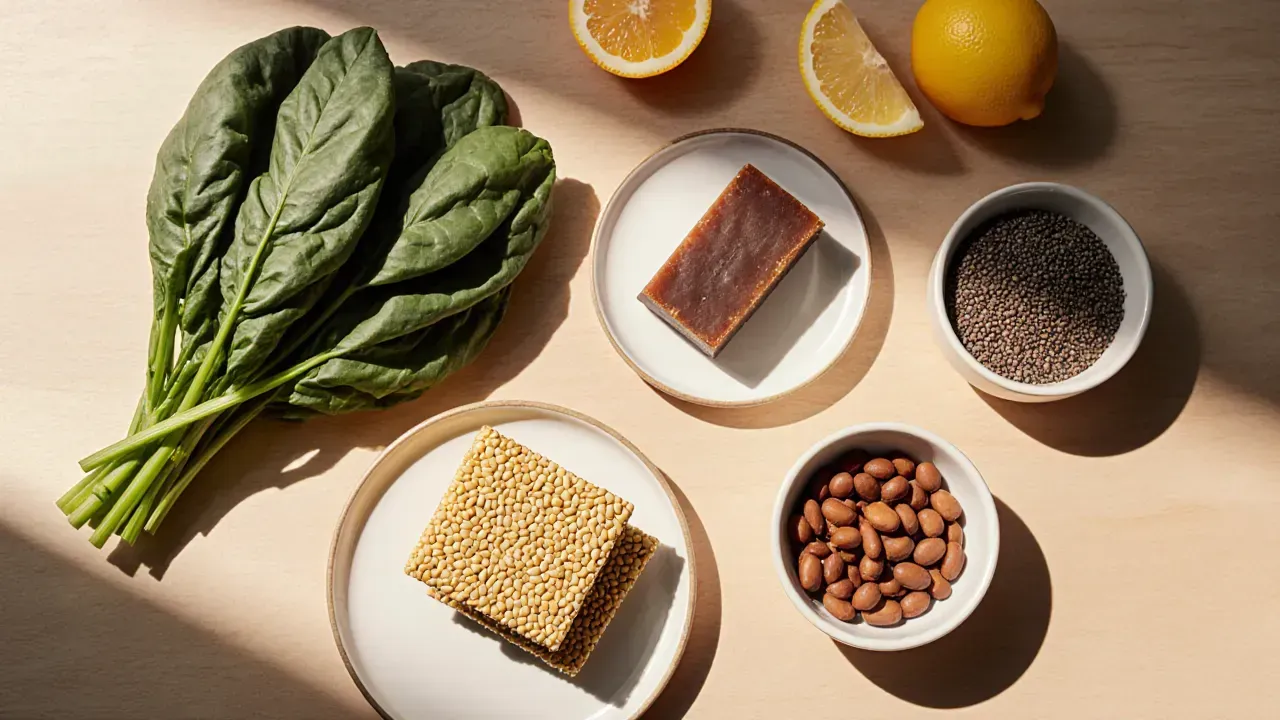
| Palak (spinach) and other leafy greens | Iron, folate and fibre in one vegetable |
| Jaggery (gud) | A better everyday sweetener than refined sugar, with some iron |
| Ragi (finger millet) | Iron and calcium together — good as porridge or roti |
| Rajma and chana (kidney beans, chickpeas) | Iron plus protein, good in a weekly rotation |
| Til (sesame seeds) | A spoon in chikki or laddoo adds iron without a fuss |
The One Habit That Multiplies Absorption
Pairing iron-rich food with a source of vitamin C — a wedge of lemon, a few amla pieces, tomatoes, or a glass of orange juice — meaningfully increases how much iron the body actually absorbs from a plant-based meal. This one habit matters more than adding any single "superfood".
What Blocks Iron Absorption
- Tea and coffee taken with or right after a meal (the tannins bind iron) — keep them at least an hour away from meals
- Very milk-heavy diets that leave little room for solid, iron-rich food
A Sample Day
Breakfast: Ragi porridge or vegetable poha with a squeeze of lemon Lunch: Dal, rice or roti, a leafy green sabzi, and a salad with tomato Snack: Til chikki or a small jaggery laddoo Dinner: Rajma or chana with rice, and curd
When to See a Doctor
If a child seems unusually tired, pale, or is falling sick often despite regular meals, it is worth asking your paediatrician for a simple blood test. This article is nutrition guidance, not a medical diagnosis — a doctor can tell you if supplementation is actually needed.