
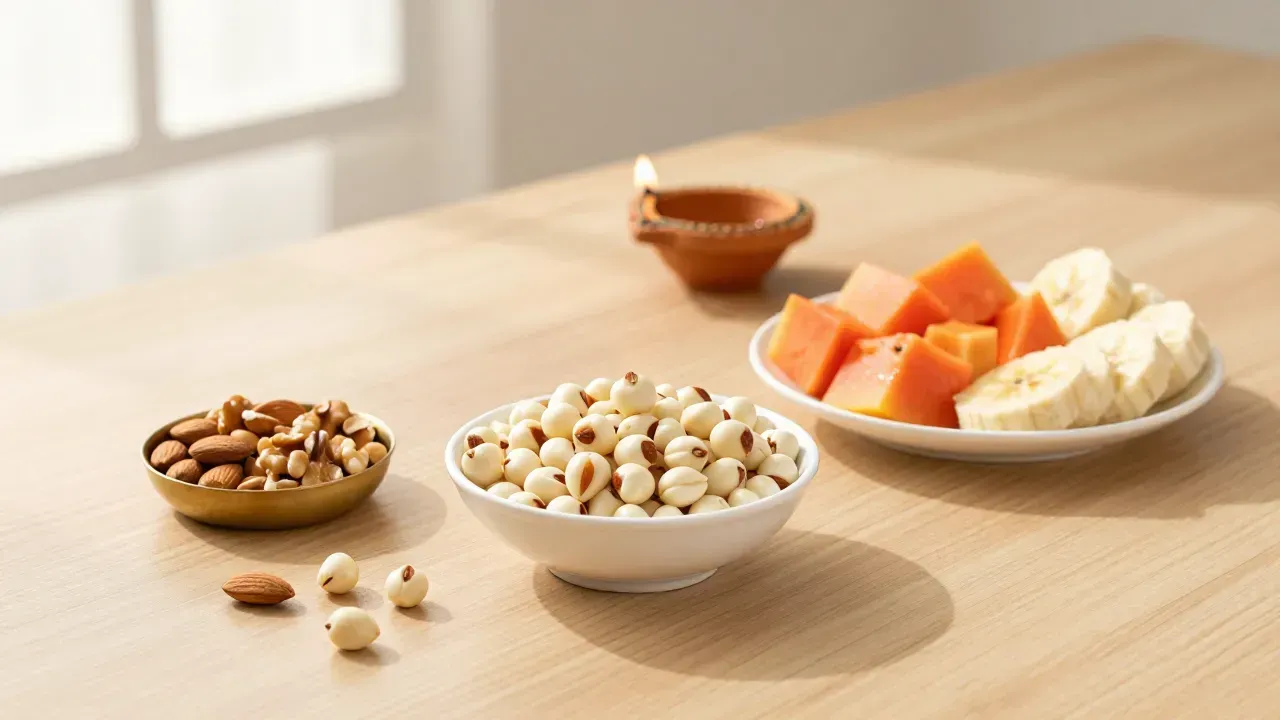
From Navratri to Diwali, food is at the heart of every celebration: vrat days, prasad, mithai boxes from every neighbour, and late festive dinners. None of this needs to be given up. A few simple habits help the body enjoy the season instead of paying for it afterwards.
Who should not do a strict fast
A nirjala vrat (no water) or a long day with no food is not safe for everyone. Talk to your doctor before any fast if you are:
- Pregnant or breastfeeding — the baby needs a steady supply of food and fluid; a vrat that still includes regular meals of permitted foods, milk and water is a safer way to keep the tradition
- Living with diabetes, or on medicine for blood pressure or thyroid — fasting can change how these medicines work
- Anaemic, underweight, or recovering from an illness
- A child or a young teenager — growing bodies should not skip meals; children can join in the spirit of the festival with the family's vrat foods at regular meal times
If you feel dizzy, faint, very weak, have a racing heartbeat, or pass very little urine while fasting, stop the fast, drink water and eat something.
Keeping a vrat the healthy way
- Never skip water — drink plain water, nimbu pani, coconut water or chaas through the day, unless your tradition forbids it and your doctor agrees it is safe for you
- Start the day with something filling, like a glass of milk, a bowl of curd or a fruit
- Eat small meals every few hours rather than one heavy meal at night
- Put protein on the vrat plate: milk, curd, paneer, roasted makhana, peanuts and rajgira (amaranth) all fit most vrat rules
- Choose roasted or boiled over fried: a sabudana khichdi with peanuts, or a rajgira or kuttu roti, is lighter than sabudana vada or kuttu puri
- Add fruit and vrat-friendly vegetables — bananas, apples, papaya, pumpkin, lauki, tomato and cucumber
- Break the fast gently, with water, fruit or something light, before a full meal
A lighter vrat plate
| Instead of | Try |
|---|---|
| Sabudana vada, kuttu puri, aloo chips | Sabudana khichdi with peanuts, kuttu or rajgira roti, roasted makhana |
Enjoying sweets without overdoing it
Mithai is part of the joy of Diwali — the aim is not to refuse it, only to keep it from replacing real meals.
- Eat a sweet after a meal, not on an empty stomach or in place of a meal
- Keep to one small piece at a time, and share boxes instead of finishing them
- Prefer sweets made at home with less sugar, or with dates, jaggery or dry fruits — but remember that jaggery and dates are still sugar
- Buy mithai from a clean, trusted shop and store it in the fridge; khoya and milk sweets spoil quickly, and a sweet that smells sour or looks discoloured should be thrown away
- Silver varq (chandi) on sweets should be pure silver from a trusted source — if in doubt, choose sweets without it
- For children, a small piece after a meal is plenty; sweets should never replace their lunch or dinner
Snacks for guests and for yourself
Festive snacks are often deep-fried and salty. Keep a few lighter options on the plate too:
Simple habits for the whole season
- Keep regular meal times on non-fasting days, even when the day is busy with cleaning, shopping and guests
- Drink enough water — late nights, crackers' smoke and travel all leave the body dry
- Use the same oil only once for deep frying; oil heated again and again is best avoided
- Fill half the plate with dal, sabzi and salad at festive dinners, so sweets and fried foods take a smaller share
- Sleep enough — a tired body reaches for sugar and fried food more often
- Take a short walk after big meals; even ten minutes helps you feel lighter
When to see a doctor
- Dizziness, fainting, or a racing heart during or after a fast
- Vomiting, loose motions or stomach pain after eating festive or outside food, especially in a child or a pregnant woman
- High or very low sugar readings if you have diabetes
- In pregnancy: less movement from the baby than usual, or any bleeding or pain — go to the hospital, do not wait for the festival to end
This is nutrition guidance, not medical advice. If you are pregnant, breastfeeding, managing a health condition or on regular medicine, ask your doctor whether and how you can fast.