
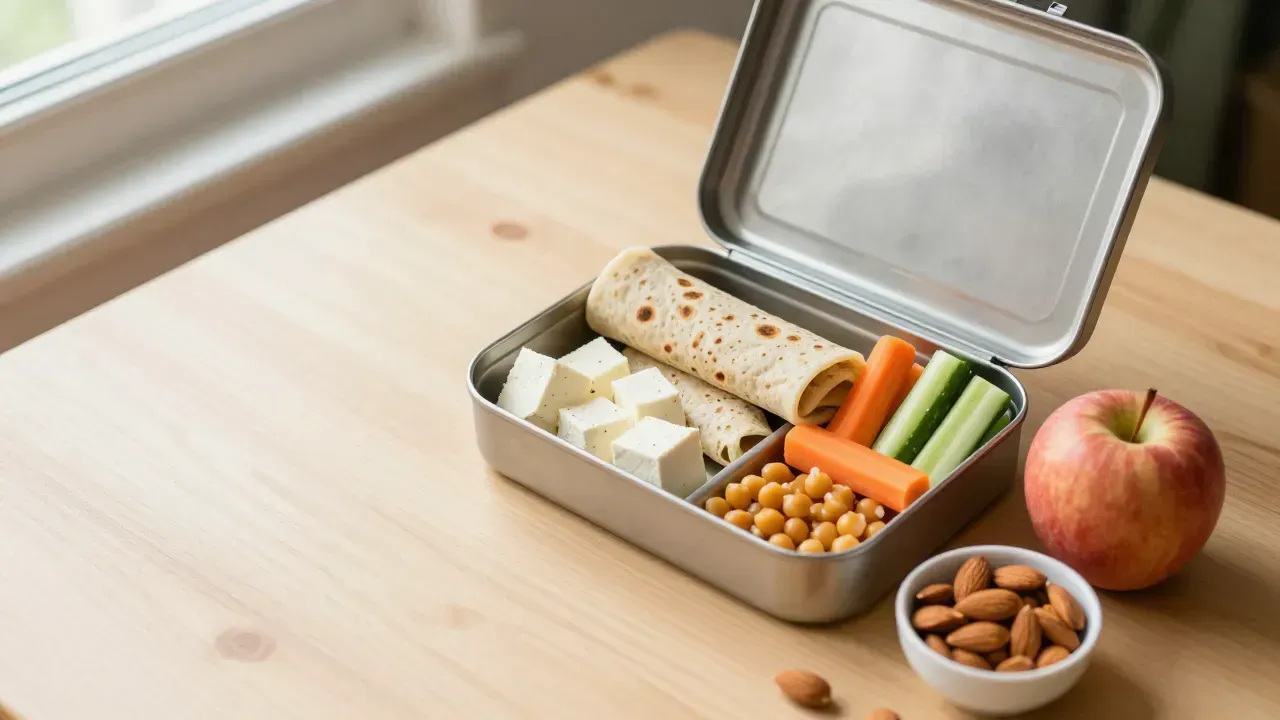
A school tiffin has one job: hold a child until they're home, without leaning on packaged snacks that fill the stomach and add little else. ICMR-NIN puts a 7–9-year-old's day at roughly 1600 kcal and 23 g protein — a good lunchbox should carry a real share of both, using ordinary home ingredients.
What a Balanced Tiffin Needs
Aim for four things in every box, in whatever ratio fits what's already in the kitchen that day:
| Group | Why it matters | Everyday options |
|---|---|---|
| A whole grain | Steady energy through the afternoon | Roti, poha, dalia, brown rice |
| A protein | Growth, focus, staying full | Dal, paneer, chickpeas, egg, curd |
| A vegetable or fruit | Fibre, vitamins, colour | Carrot sticks, cucumber, seasonal fruit |
| A healthy fat | Brain development, taste | Ghee, a few nuts, seeds |
Five Combinations That Travel Well
- Vegetable paratha + curd + a mango wedge
- Moong dal chilla rolled with mint chutney + cucumber sticks
- Peanut poha + a boiled egg on the side
- Dal-rice pressed into small balls (tastes fine cold) + a banana
- Besan cheela + a small bowl of roasted chana
What to Go Light On
- Packaged chips, biscuits and namkeen crowd out real food without filling the actual nutrient gap
- Sugary juices and flavoured milk — a piece of fruit does more for less sugar
- Food that needs to stay hot; if the school has no warming facility, pick items that taste fine at room temperature
A Note on Fussy Eaters
Picky eating between ages 3 and 7 is developmentally normal, not a sign that something is wrong. Repeated small exposure — the same vegetable offered a different way, without pressure — usually works better over weeks than any single meal does. If a child consistently refuses entire food groups for months, or their growth seems to be slowing, that's worth raising with your pediatrician — this article is nutrition guidance, not medical advice.