India's National Family Health Survey has repeatedly found more than half of women aged 15–49 to be anaemic. It is so common that its symptoms get mistaken for an ordinary personality — tired, low, breathless on stairs.
What it actually costs you
- Constant fatigue and weakness
- Breathlessness climbing stairs or carrying a child
- Poor concentration and memory
- Hair fall and brittle nails
- In pregnancy: higher risk of premature birth, low birth weight, and dangerous bleeding at delivery
Why it is so common here
- Menstrual loss month after month without replacement
- Largely plant-based diets, where iron is absorbed less easily than from meat
- Tea and coffee with or just after meals — the tannins can cut iron absorption sharply, and this is one of the most common and most fixable habits
- Closely spaced pregnancies
- Worm infestations in some regions
Eating against it
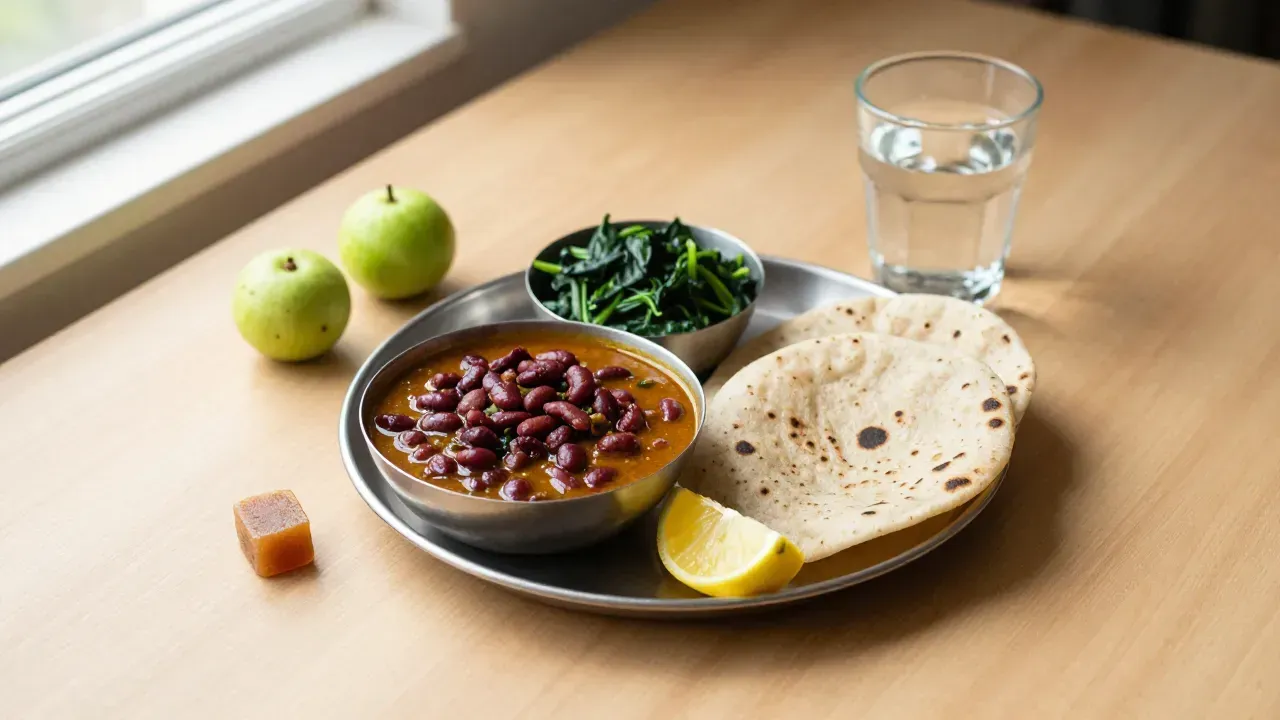
Iron-rich foods: masoor and other dals, rajma and chana, palak and other green leaves, drumstick leaves, sesame (til), jaggery (gud), ragi, poha, eggs, liver, and meat if you eat it.
The absorption rules matter as much as the food:
- Pair every iron meal with a vitamin-C food — lemon, amla, guava, tomato, orange
- Keep tea and coffee to at least an hour away from meals
- Cooking in an iron kadhai genuinely adds absorbable iron
- Soaking and sprouting pulses reduces the phytates that block absorption
- Calcium competes with iron, so a large glass of milk is better placed away from your main iron meal
Do not self-prescribe iron
Iron supplements have real side effects, and not every anaemia is iron-deficiency anaemia — some have entirely different causes that iron will not fix and may mask. Get a haemoglobin test and let a doctor decide the dose and duration. Government programmes provide iron-folic acid supplementation free to many groups.
Get tested if
You are pregnant, planning a pregnancy, have heavy periods, or simply recognise yourself in the symptoms above. It is a cheap, quick blood test and it is worth doing.